diocesano museum
diocesano museum
The project involves extending the Diocesan Museum in Milan, located within the ancient Roman citadel of Mediolanum, where Roman traces still shape the city’s modern urbanization.
Urban development



The strategy begins by highlighting two prominent palimpsests along Porta Ticinese, where unfinished spaces create a void between differently oriented buildings. Connecting them with the park transforms the area into a promenade that honors Milan’s bombed history while showcasing the ruins’ fragile beauty, using open spaces and the ground to create a dialogue between the ruins and the palimpsests.
Architecture
It began with the idea of expanding the Diocesano Museum, not just by adding exhibition space but also by integrating its architecture and collections to provide visitors with a comprehensive experience of the artistic heritage of the Ambrosian Diocese. This approach involved targeted interventions throughout the Sant’Eustorgio complex to enhance the museography of the existing exhibition areas.
a) The addition
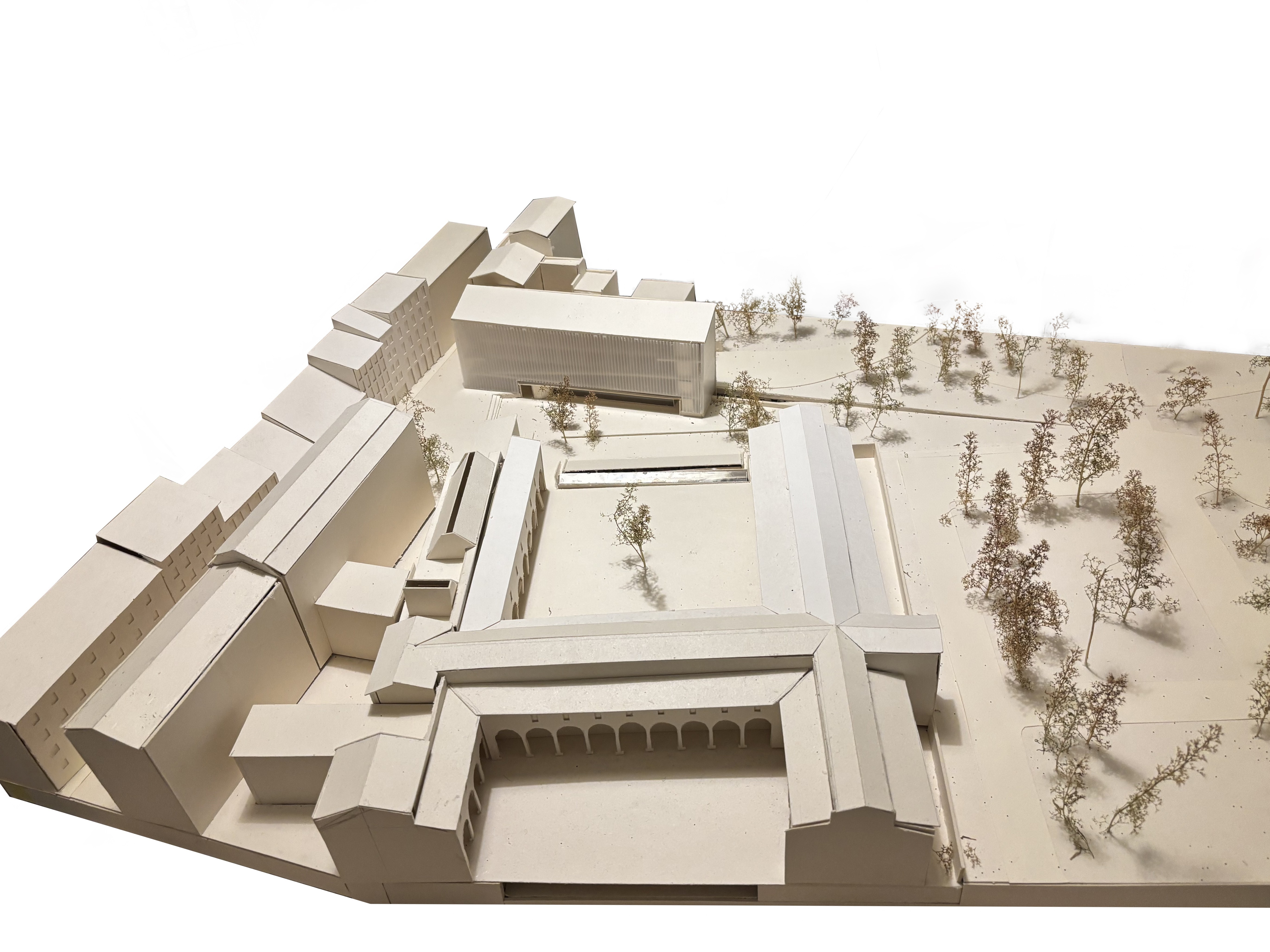
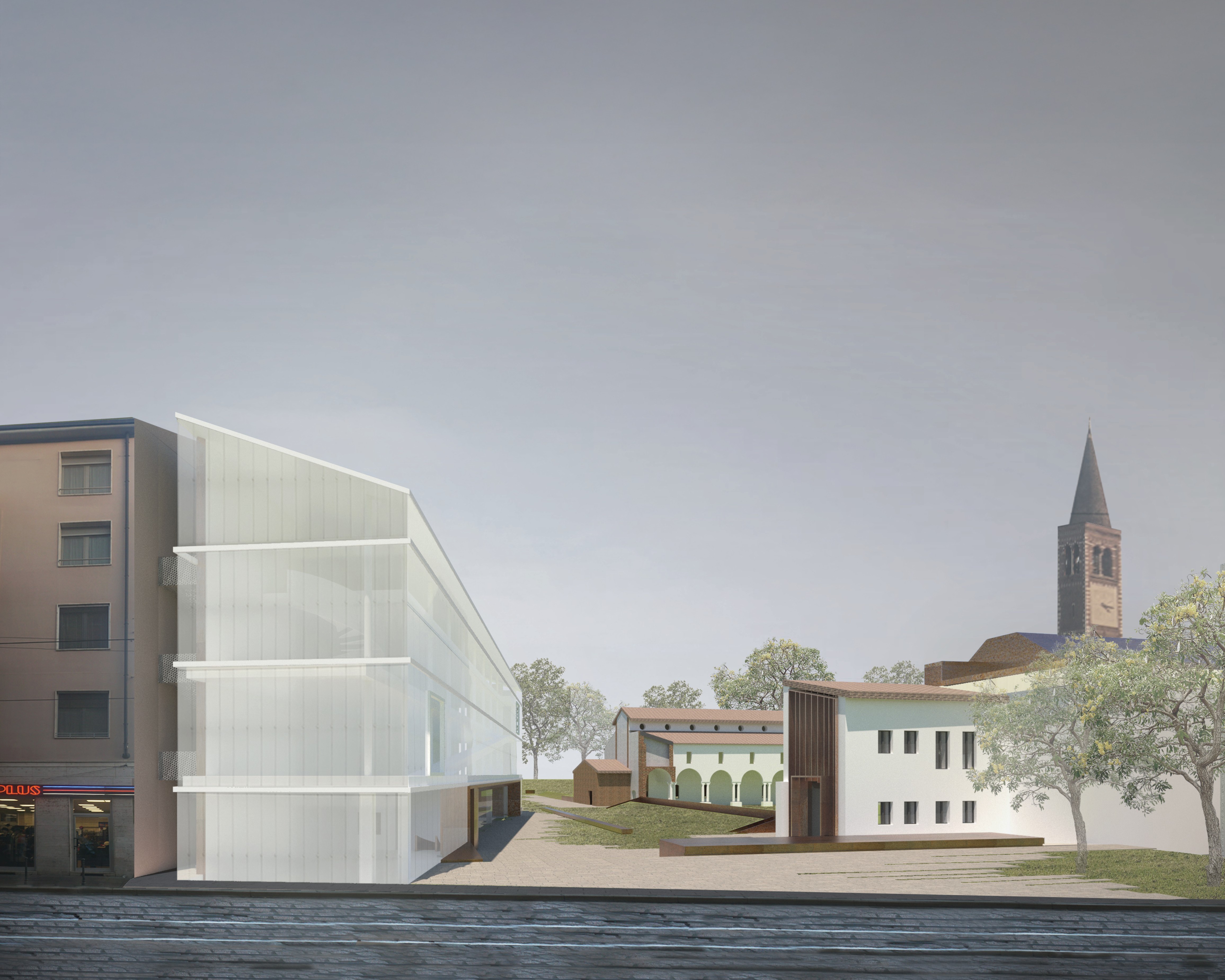

The new museum wing, located along Corso di Porta Ticinese, is designed as an autonomous structure that complements the historical surroundings. Its geometric form, inspired by nearby gabled roofs, marks the end of the urban block while enhancing the open space near Sant’Eustorgio’s second cloister. The facade, made of white opaline cast glass panels, creates a cohesive and lightweight appearance. Measuring 9m x 50m, the rectangular building mirrors the proportions of the missing arm of the second cloister, linking it to the Milanese shophouses.
b) The new roof insertion
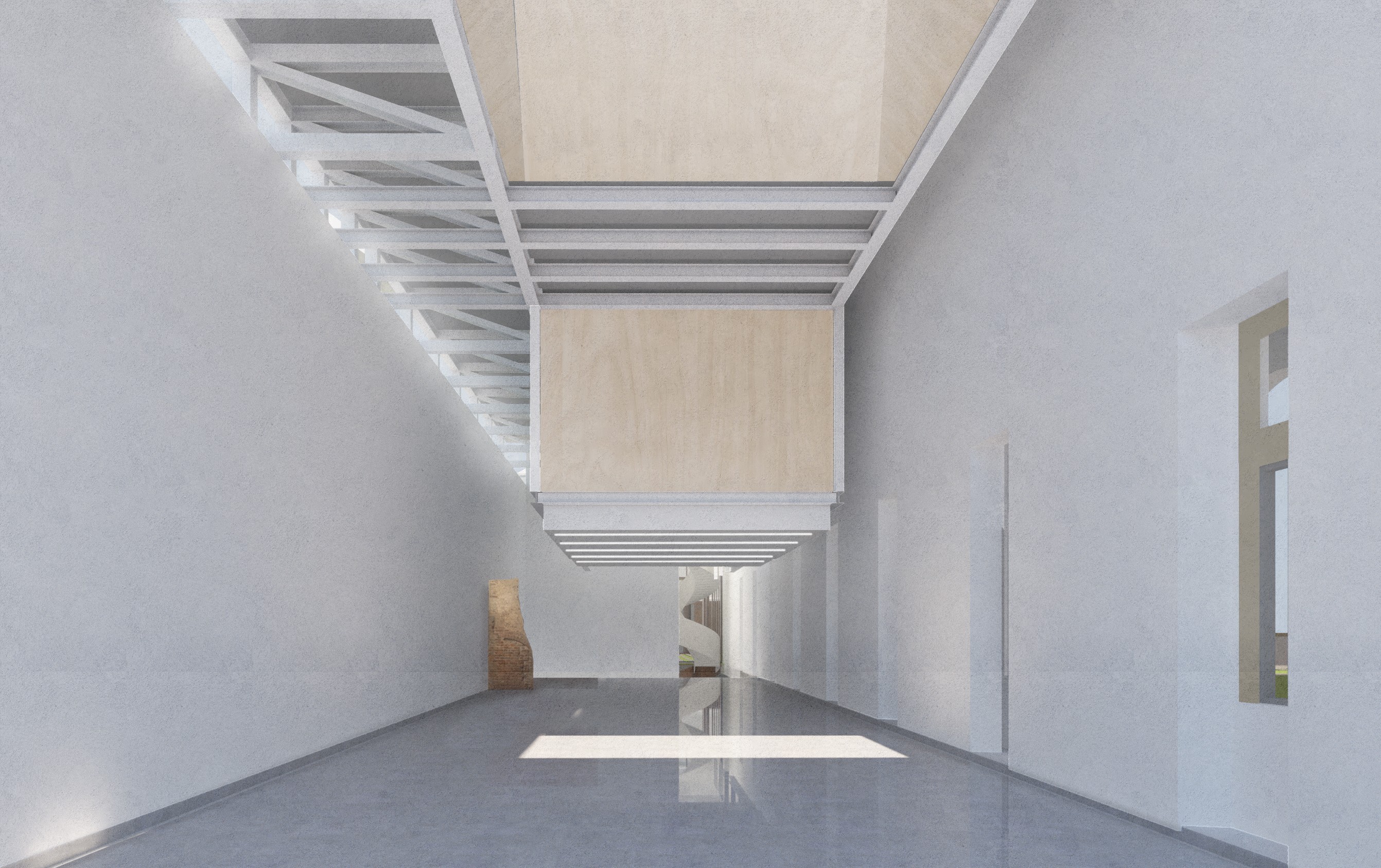
The west wing of the second cloister will have its roof removed to restore its original state and introduce a library. The project explores reconstructing architecture that connects symbolically with the past while revealing a contemporary identity. Geometrically folded roofs, rising at points to admit natural light. A suspended reading area will occupy the 8-meter-high space.
Location
Italy - Milan
In collaboration w/
L. Longo & Y. Yang
Project Year
2024
back to top
diocesano museum
The project involves extending the Diocesan Museum in Milan, located within the ancient Roman citadel of Mediolanum, where Roman traces still shape the city’s modern urbanization.
Urban development
The strategy begins by highlighting two prominent palimpsests along Porta Ticinese, where unfinished spaces create a void between differently oriented buildings. Connecting them with the park transforms the area into a promenade that honors Milan’s bombed history while showcasing the ruins’ fragile beauty, using open spaces and the ground to create a dialogue between the ruins and the palimpsests.
Architecture
It began with the idea of expanding the Diocesano Museum, not just by adding exhibition space but also by integrating its architecture and collections to provide visitors with a comprehensive experience of the artistic heritage of the Ambrosian Diocese. This approach involved targeted interventions throughout the Sant’Eustorgio complex to enhance the museography of the existing exhibition areas.
a) The addition
The new museum wing, located along Corso di Porta Ticinese, is designed as an autonomous structure that complements the historical surroundings. Its geometric form, inspired by nearby gabled roofs, marks the end of the urban block while enhancing the open space near Sant’Eustorgio’s second cloister. The facade, made of white opaline cast glass panels, creates a cohesive and lightweight appearance. Measuring 9m x 50m, the rectangular building mirrors the proportions of the missing arm of the second cloister, linking it to the Milanese shophouses.
b) The new roof insertion
The west wing of the second cloister will have its roof removed to restore its original state and introduce a library. The project explores reconstructing architecture that connects symbolically with the past while revealing a contemporary identity. Geometrically folded roofs, rising at points to admit natural light. A suspended reading area will occupy the 8-meter-high space.
Location
Italy - Milan
In collaboration w/
L. Longo & Y. Yang
Project Year
2024
back to top